
Landbell USA and Landbell Group compare local and global notes on the implementation of textile EPR policy and explore what global alignment could look like in practice
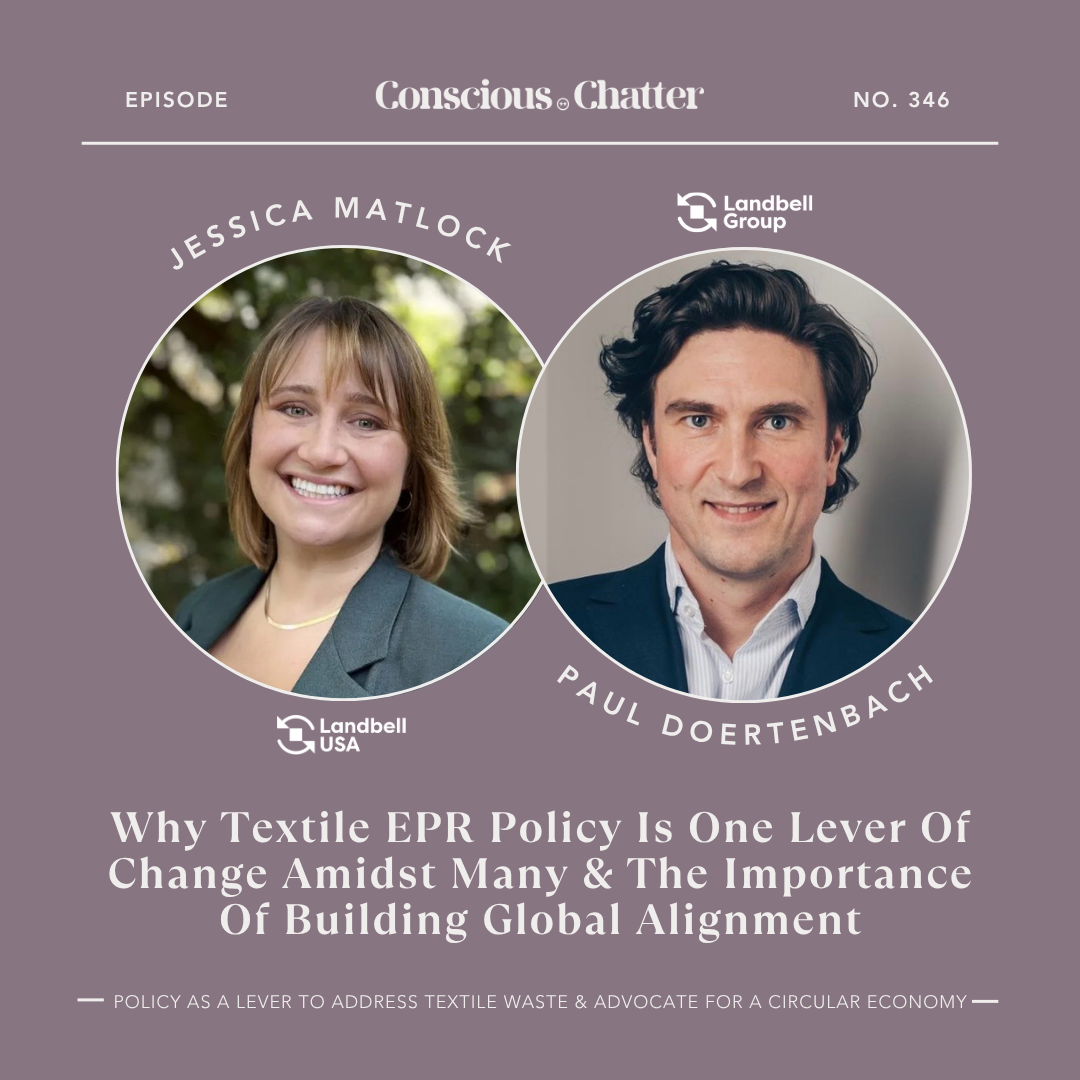


In Episode 346, Kestrel welcomes Jessica Matlock, the Government Relations Manager for Landbell USA, and Paul Doertenbach, the Head of the Textile Programme at Landbell Group, to the show. Jessica previously served as a Policy Analyst in the California State Senate where she staffed housing, local government and environmental legislation, most notably SB 707 (Newman), the Responsible Textile Recovery Act of 2024. At Landbell Group, Paul leads the development of textile EPR solutions across Europe and internationally. He was part of the team behind I:Collect (I:CO), helping to establish and grow the company into a global textile take-back and collection platform, and is also co-founder of reverse.fashion, a tech company developing AI-powered automated sorting solutions for textile reuse and recycling.
Landbell USA is the Producer Responsibility Organization selected by CalRecycle to implement the Responsible Textile Recovery Act of 2024 – the first-in-the-nation Extended Producer Responsibility program for clothing and textiles.

“While EPR can solve a lot of things, it is just one more piece of legislation required on our journey towards implementing the circular economy in our industry. And what I do see is a lot of times when stakeholders within the reverse supply chain or any actors actually within our industry have a problem, they close their sentence by saying, yeah, but we will have EPR covering that. And it's not gonna be EPR, we know its boundaries. We discussed the targets that are being set, and most likely it will not solve all issues that we have.” -Paul
“I think the EU's waste directives are a lot more top down. Like the the government and legislation is really setting those targets. and in California it's more of a bottom up approach … California's structure very much puts a lot of those performance targets on the PRO to set in partnership with CalRecycle, and that is being done through an intentionally collaborative approach.” -Jessica

THEME — POLICY AS A LEVER TO ADDRESS TEXTILE WASTE & ADVOCATE FOR A CIRCULAR ECONOMY
Building on this month’s theme of USING POLICY AS A LEVER TO ADDRESS TEXTILE WASTE & ADVOCATE FOR BUILDING A CIRCULAR ECONOMY – in this episode, we’re taking a look at it through the lens of a producer responsibility organization or PRO – an entity that helps regulate Extended Producer Responsibility (EPR) legislation through practice.
I bring on two guests for this one – one who works with LANDBELL USA (the PRO for California’s Textile Recovery Act of 2024) and one from LANDBELL GLOBAL, who through their subsidiary, European Recycling Platform, serve as the PRO or offer compliance management for various textile Extended Producer Responsibility (EPR) bills across the EU.
This may sound a bit complex, but basically – they are focused on helping support brands and infrastructure in the transition to regulating new textile EPR legislation.
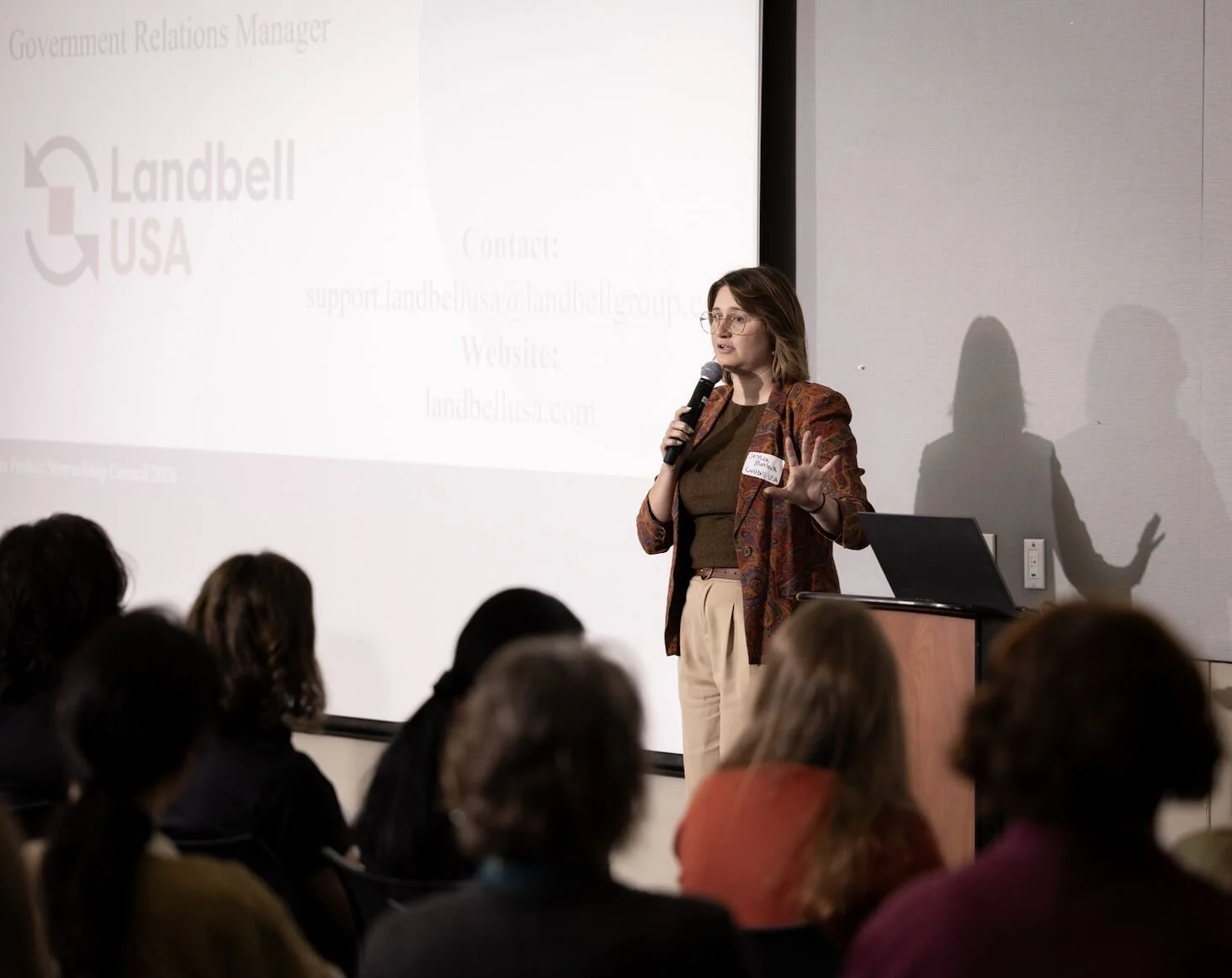

If you’ve been listening to the show for a while, you’ve heard me talk about the holy grails or the solutions that folks or media or industry across fashion will often latch onto. They are often platformed as this sort of magical option that could change the way the current system operates. But, as we have talked about before – this is totally unrealistic. There are no one-dimensional so-called solutions that are going to entirely transform this massive and multifaceted industry.
Currently – as my guests bring up – EPR or extended producer responsibility legislation is one of those solutions that is being put on the podium as this moment’s cure-all for fashion. While EPR legislation is extremely exciting and does have massive potential, I loved hearing from my guests - who are both working directly in this space - about how EPR alone isn’t going to address all of the fashion industry’s issues. We need additional legislation and infrastructure and other aspects to push real systems change forward.
With this complexity in mind, we get into some comparisons between what’s going on with textile EPR in California in the U.S. and countries like the Netherlands and others across the EU. I often resist this sort of thing – because it’s so layered when there are different cultures, behaviors, and infrastructures involved. But, given the moment that we’re in, global alignment seems to be a prevailing theme and a necessity if we want to successfully implement textile EPR into such a worldwide industry.
Links from our conversation: